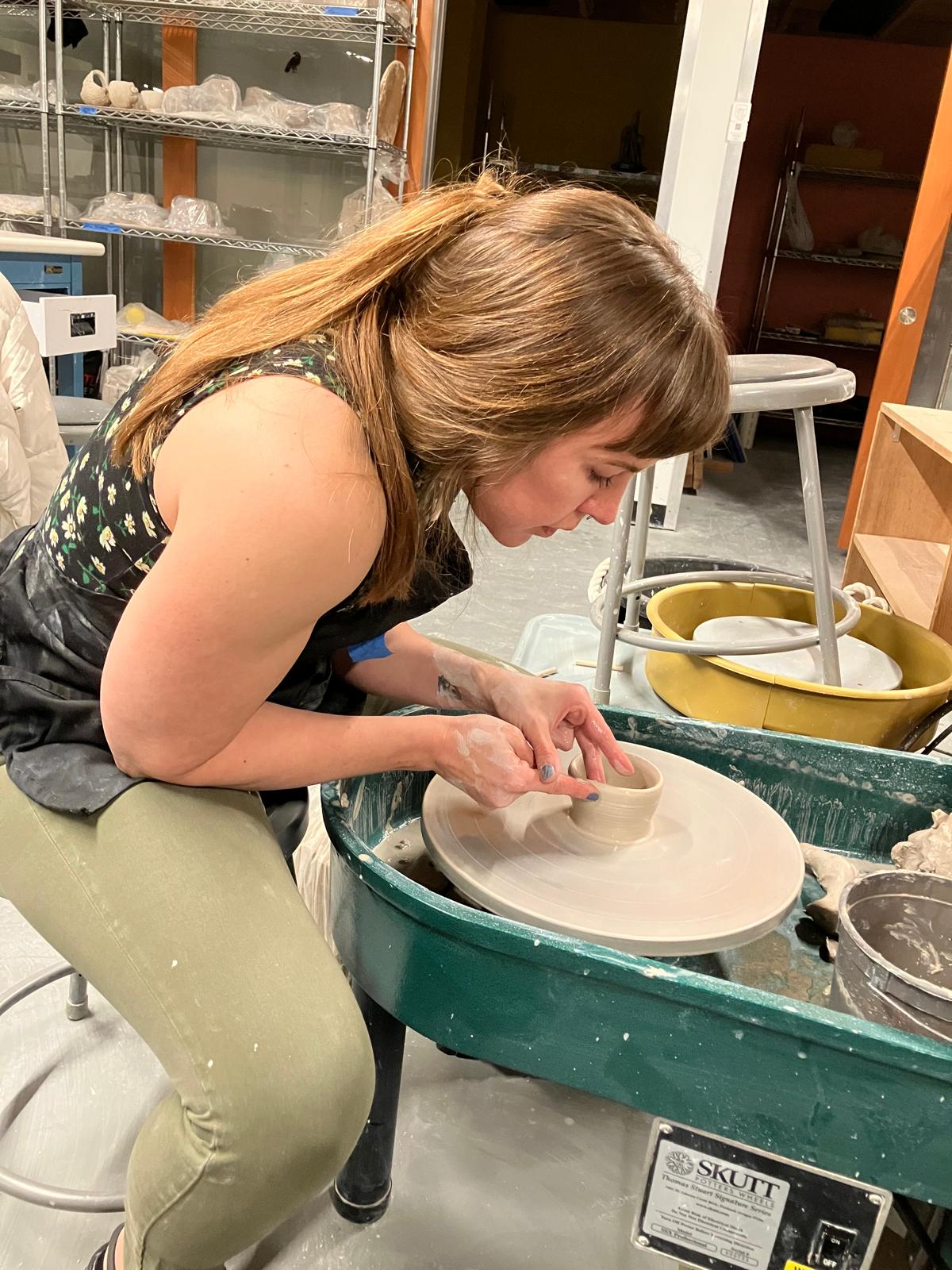
There is a greenhouse I keep returning to in my imagination. Not a real one — or perhaps a composite of several. The air inside is thick with moisture and the smell of green things, and the light has a quality that is neither quite indoors nor outside. In this greenhouse, everything is responding to everything else: the roots finding water, the leaves angling toward the sun, the flowers producing their particular scent at their particular hour. Nothing in it is striving. Everything in it is simply, completely present to its own unfolding.
I think about pleasure the way I think about that greenhouse. Not as a destination you earn your way toward, not as a reward waiting at the end of the hard work — but as something that is available in the present moment, if the conditions are right. If the soil is good. If the attention is here.
The Misunderstanding We Inherit
Most of us grew up with a transactional relationship to pleasure. You finish the work, then you rest. You get through the hard thing, then you let yourself feel good. You earn it, defer it, ration it carefully against some future moment when you will finally have done enough to deserve it.
I spent a long time operating this way, and I've watched clients spend even longer. And what I've come to believe is that this is not a discipline. It is a symptom. The inability to receive pleasure in the present — to actually take in the warmth, the taste, the beauty, the touch that is available right now — is one of the more reliable signals I know that a nervous system is working very hard to stay safe.
"Pleasure isn't something you pursue. It's something you allow. And the doorway is almost always the same: presence."
Why Pleasure Gets Blocked
For many people — particularly those who have experienced trauma, marginalization, or chronic stress — the nervous system has learned something that once made perfect sense: the present moment is not safe. Presence means contact. And contact has meant pain.
So the system does what systems do. It moves away from the now. It dissociates, numbs, intellectualizes, maintains a slight remove from direct experience. We narrate our pleasure rather than inhabiting it. We notice, from a step back, that a thing is beautiful — without quite letting the beauty in.
This protected us. It may still be protecting us in certain contexts. And it also means we are living at a partial volume, taking in a fraction of what is available.
Somatic practitioners sometimes talk about "capacity" — the nervous system's ability to tolerate good sensation without contracting away from it. This is a real and learnable skill. It is not something you either have or don't have. It is something you cultivate, slowly, with patience, the way you might cultivate a sensitive plant: giving it the right conditions and then getting out of the way.
Building the Capacity to Receive
What I've found — in my own body and in working with clients — is that the practices that expand your capacity for pleasure are the same practices that expand your capacity to be present with discomfort. They are not opposites. They are the same skill, moving in different directions. Both require the same quality of attention: slow, curious, non-grasping.
Some places to begin:
- Start smaller than you think. If you've been living at a distance from your own experience, starting with large pleasures can actually produce contraction rather than opening. Begin with something almost impossibly small: the specific temperature of water on your hands, the weight of a book in your lap, the quality of light at a particular hour. Stay with it longer than feels necessary. Let it actually land.
- Practice noticing what's already good. Before you can open to pleasure, you need to build the habit of recognizing it when it's already present. This sounds simple. It is actually a practice. There is almost always something, somewhere in the body, that is okay — or even quietly pleasant. Finding it, and staying with it for more than a moment, is trainable.
- Slow down the edges. Much of the pleasure of an experience lives in the arrival and the departure — the moment before you take the first bite, the breath at the end of an embrace before you release. Slowing down the thresholds, attending to them rather than rushing through them, dramatically changes how much you can take in.
- Welcome the wave. Pleasure, like all sensation, comes in waves. Many people unconsciously brace when they feel something good — either trying to hold it still, or already anticipating its ending. I have done this. Practice letting the wave peak and ebb without chasing it or mourning it. Pleasure you trust to pass is pleasure you can actually receive.
Pleasure as a Legitimate Goal
Adrienne maree brown, in Pleasure Activism, makes an argument I find myself returning to often: that reclaiming pleasure — full, embodied, unapologetic pleasure — is itself a form of political and personal healing. Her framing names something I've watched be true in practice: that people who have experienced marginalization, trauma, or chronic stress are often the ones most systematically cut off from their own pleasure, and that reclaiming it isn't self-indulgence. It's repair. It's a way of insisting that your life, in the present tense, deserves to feel good.
One of my deepest commitments as a coach is to treat pleasure as a legitimate destination — not a side effect, not a reward, not something we'll get to once the real work is done. The capacity to feel genuinely good is not separate from healing. In many of the most important ways, it is what healing is.
I think about the window of tolerance — the zone in which we can be present with experience without shutting down or flooding — and I want to expand its meaning. The window isn't only for processing difficult things. It is the space in which you get to have your life. All of it. Including the moments that are remarkably, unexpectedly, stubbornly beautiful.
You don't have to earn your way there. You just have to keep returning to the present, with some degree of willingness, until the present starts to feel — bit by bit — like somewhere worth arriving.